
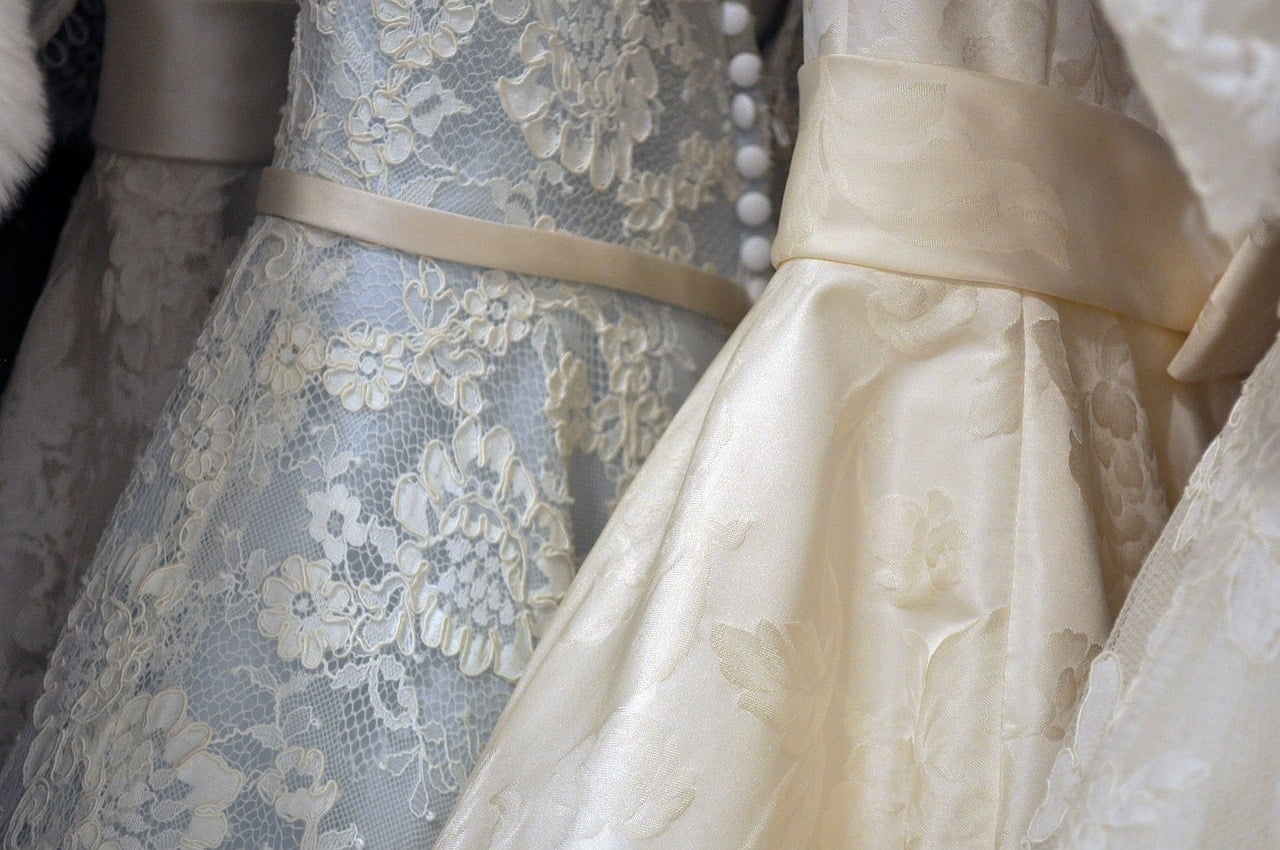
Key Takeaways
- Silk mikado is a structured, matte fabric – often a silk-polyester blend – that holds architectural shapes, while duchess satin is a heavier, pure-silk weave with a luminous, pearly sheen and a fluid drape.
- Price reflects silk content: silk mikado runs £49.90-£189.90 per metre, while duchess satin commands £67.90-£249.90 per metre.
- The right choice depends almost entirely on silhouette – mikado for sculpted, modern gowns; duchess satin for romantic, flowing designs.
- Both fabrics, at their premium end, draw on Mulberry silk fibres – the same long-staple fibre that Mayfairsilk uses in its Grade 6A bedding collection.
- Momme weight is a key factor often overlooked – it tells you more about a fabric’s behaviour and longevity than price alone ever will.
Choosing between silk mikado and duchess satin is less about one being “better” and more about which one serves the gown. Both are genuine luxury fabrics with long histories in bridal couture, but they behave in completely different ways on the body. The sections below break down every meaningful difference – composition, weight, finish, price, and real-world wearability – so the decision becomes straightforward.
Two Premium Fabrics, Very Different Gowns
A bride wearing a sleek, structured column gown and a bride in a sweeping, romantic ballgown could both be wearing silk – but they are almost certainly wearing different silks. Silk mikado and duchess satin each dominate their own corner of bridal design. Understanding why requires looking at how each fabric is actually made.
What Each Fabric Is Made From
Silk Mikado: Blend, Pure Silk, or Polyester – Plus Its Double-Weave Construction
Silk mikado originated in Japan, where a refined double-weave technique was developed to produce a fabric with both body and a degree of graceful movement. Most commercial mikado is a silk-polyester blend, typically containing 60-70% silk, which lends it structure and contributes to its comparatively accessible price point. At the couture end of the market, some mills weave mikado from 100% Mulberry silk, producing a richer hand-feel while retaining the fabric’s characteristic crispness.
The double-weave construction is the defining technical feature. It gives mikado its excellent wrinkle resistance, making it one of the more practical premium fabrics for long wedding days where the gown needs to look pristine from the ceremony through to the last dance.
Duchess Satin: Traditionally Pure Mulberry Silk, Now Available in Blends and Polyester
Duchess satin is traditionally woven from 100% Mulberry silk using a satin weave structure, where the majority of warp threads sit on the surface to catch and reflect light. This is the source of its signature pearly lustre – the sheen that made it a fabric of choice for royal and ceremonial dress for centuries. Modern versions often incorporate polyester or rayon to reduce cost, though these blends sacrifice some of the drape and depth of colour that pure silk duchess satin delivers. For bridal use at the premium level, pure Mulberry silk duchess satin remains the benchmark.
Texture, Weight and Drape Compared
Matte Crispness vs Pearly Sheen
Silk mikado has a subtly textured, crisp hand-feel that softens slightly with wear. Its matte surface emphasises cut and construction – seams read cleanly in photographs, and architectural details hold their intended form. Duchess satin, by contrast, is smooth, cool, and uniformly sleek to the touch. Its pearly glow reflects light in a way that flatters skin tones and creates the luminous, traditional bridal effect many designers are specifically working towards.
One practical note: duchess satin’s reflective surface demands near-impeccable tailoring. Any inconsistency in seam allowances or pressing tends to show. Mikado’s subtle texture is more forgiving, offering a degree of visual camouflage for minor construction variations – a meaningful consideration for both designers and home sewists.
Momme Weight and How It Shapes a Silhouette
Momme (mm) is the unit used to measure silk fabric density. A higher momme count indicates a denser, more substantial weave. Silk mikado typically sits at 16-20 momme, which gives it enough body to hold pleats, sculpted necklines, and defined waistlines without the need for additional interfacing. Duchess satin sits slightly heavier at 19-22 momme, and that extra density produces its signature fluid drape – the fabric falls under its own weight, creating soft folds and sweeping trains rather than standing away from the body.
This difference in momme range explains more about how these two fabrics behave in a gown pattern than almost any other specification.
Which Fabric Costs More and Why
Price Ranges Per Metre
Silk mikado typically runs £49.90-£189.90 per metre. Duchess satin commands a higher range of £67.90-£249.90 per metre. For a full bridal gown requiring several metres of fabric, that difference compounds quickly – making composition and intended silhouette important factors in the early budgeting stage.
What Drives the Price Difference
Silk content percentage is the single biggest price driver. Higher silk content means higher raw material cost at every stage of production. Manufacturing origin also matters – European and Japanese mills typically price above Chinese or Indian production, reflecting labour costs, quality controls, and weave complexity. Width availability is a quieter factor worth noting: duchess satin is often cut wider (137-152 cm) than mikado (114-152 cm), which can reduce the total meterage needed for full-skirted designs and partially offset the per-metre price difference.
Bridal Applications: Choosing the Right Silhouette
When to Choose Silk Mikado
Silk mikado is the go-to for modern, architectural bridal designs. It holds pleats and sculpted shapes without extra interfacing, supports defined waistlines and structured bodices, and resists wrinkling across long event days. Its matte finish photographs cleanly, making construction details – topstitching, seaming, geometric cutouts – read with precision. Structured mikado bodices pair particularly well with fluid satin skirts, a combination seen across many contemporary bridal collections where the fabric’s body complements softer counterparts without competing with them.
For petite frames, careful draping and fitting are worth the extra attention – mikado’s structure can overwhelm a smaller silhouette if the pattern is not adjusted accordingly.
When to Choose Duchess Satin
Duchess satin belongs to romantic, traditional bridal silhouettes – ballgowns, A-lines with sweeping trains, and any design where cascading fabric is the centrepiece. Its weight creates natural, graceful folds without requiring additional volume from underlayers, and its pearly sheen carries the classic luminosity associated with formal and royal bridal wear. Voluminous, movement-rich skirts in duchess satin function as a deliberate counterpart to structured mikado bodices, a pairing that has become a recognisable approach in high-end bridal design.
Durability, Maintenance and Wearability
Both fabrics are genuinely durable, but they have different vulnerabilities. Silk mikado’s double-weave construction makes it notably wrinkle-resistant – it recovers well after being seated or compressed, which matters considerably across a full wedding day. Duchess satin is robust but more prone to visible creasing, water spotting, and perspiration marks on its smooth surface. Strategic internal construction – boning, slips, and lining choices – can mitigate some of this, but duchess satin requires more considered handling throughout the day.
For extended wear, mikado is the more practical choice. Duchess satin’s heavier weight in full skirts can also cause fatigue over long events, while its slippery texture requires careful construction to keep straps and layered elements in place.
Mikado or Duchess Satin: The Silhouette Decides
When the silhouette is sculpted and architectural, silk mikado is the clear choice. When the design calls for flowing movement and a luminous, traditional finish, duchess satin takes over. Neither fabric is universally superior – they solve different design problems, and the best bridal collections use both deliberately.
At their end, both fabrics trace back to the same fibre: Mulberry silk, valued for its long staple length, natural softness, and inherent sheen.
Mayfairsilk
13 Hanover Square
Mayfair
London
England
W1S 1HN
United Kingdom


