Clean-label demand, advanced processing, and stricter regulations reshape the U.S. sodium erythorbate market, driving steady growth through 2035.
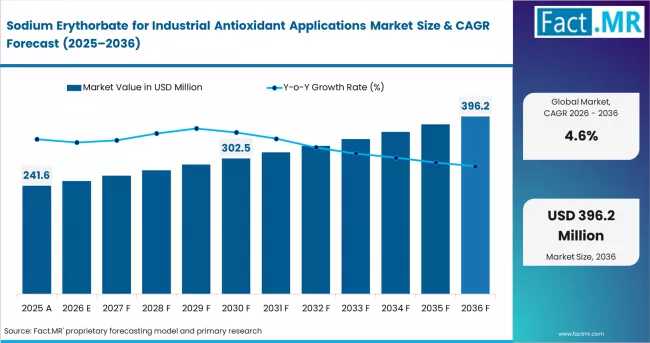
ROCKVILLE, MD, UNITED STATES, April 20, 2026 /EINPresswire.com/ — According to the latest industry analysis, the United States sodium erythorbate market for industrial antioxidant applications is valued at approximately USD 420 million in 2026 and is projected to reach USD 445 million in 2027, expanding to nearly USD 720 million by 2035, reflecting a CAGR of 5.5% over the forecast period.The market is expected to create an incremental opportunity of over USD 300 million, driven by rising demand for processed meat products, packaged foods, and extended shelf-life solutions.
Get detailed market forecasts, competitive benchmarking, and pricing trends https://www.factmr.com/connectus/sample?flag=S&rep_id=14756
Market transformation in the U.S. is being shaped by:
Strong regulatory oversight from food safety authorities
Growing consumer demand for clean-label and preservative transparency
Expansion of ready-to-eat and convenience food segments
Quick Stats
Market Size (2026): USD 420 Million
Market Size (2027): USD 445 Million
Forecast Value (2035): USD 720 Million
CAGR (2026–2035): 5.5%
Incremental Opportunity: USD 300 Million+
Leading Segment: Food-grade sodium erythorbate
Leading Country: United States
Key Players: Archer Daniels Midland, Cargill, Jungbunzlauer, Foodchem International, Tenglong Chemical
Executive Insight for Decision Makers
The U.S. market is shifting toward compliance-driven, high-quality ingredient sourcing, where food processors prioritize traceability, safety, and performance over cost alone.
Strategic Implications:
Manufacturers must adopt FDA-compliant, high-purity production systems
Food processors should integrate sodium erythorbate to ensure color stability and shelf-life optimization
Investors should focus on companies with domestic production and resilient supply chains
Risk of Inaction:
Failure to meet evolving food safety standards and clean-label expectations could result in loss of major retail and foodservice contracts.
Market Dynamics
Key Growth Drivers
Strong demand from processed meat and poultry industry
Growth in ready-to-eat and packaged food consumption
Increasing need for oxidation control and shelf-life extension
Rising focus on clean-label and safe food additives
Key Restraints
Fluctuating raw material prices (glucose derivatives)
Availability of alternative antioxidant solutions
High regulatory compliance and certification costs
Emerging Trends
Adoption of natural and bio-based antioxidant formulations
Increased usage in frozen and convenience foods
Expansion into pharmaceutical stabilization applications
Focus on transparent and traceable ingredient sourcing
Segment Analysis
Leading Segment: Food-grade sodium erythorbate holds approximately 68% market share, driven by its widespread use in meat preservation.
Fastest-Growing Segment: Pharmaceutical-grade segment, growing at 6.5% CAGR, supported by stability and quality requirements.
Breakdown:
By Application: Processed meat, beverages, bakery, pharmaceuticals
By End-use: Food processors, pharmaceutical manufacturers
Strategic Importance:
Food applications dominate due to high-volume consumption, while pharmaceutical use offers premium pricing and long-term growth potential.
Supply Chain Analysis (Critical Insight)
Value Chain Overview:
Raw Material Suppliers:
Corn-based glucose producers and fermentation inputs
Manufacturers / Producers:
Convert glucose into sodium erythorbate through fermentation and chemical synthesis
Distributors:
Food ingredient distributors and specialty chemical suppliers
End-Users:
Meat processors, packaged food manufacturers, pharmaceutical companies
Who Supplies Whom:
Agricultural processors supply glucose feedstock to manufacturers
Manufacturers supply bulk sodium erythorbate to distributors
Distributors supply food and pharma companies across the U.S.
Insight:
Domestic sourcing and supplier partnerships are becoming essential to mitigate supply disruptions and price volatility.
Pricing Trends
Operates under a commodity-to-premium hybrid pricing model
Pricing influenced by:
Corn/glucose price fluctuations
Energy and production costs
Regulatory compliance and certifications
Margin Insights:
Standard food-grade: 10–14% margins
Pharmaceutical-grade: 20–28% margins
Regional Analysis (United States Focus)
The United States remains the largest and most mature market, driven by:
Advanced food processing infrastructure
High consumption of processed meat and packaged foods
Strict FDA regulations ensuring quality and safety
High-Growth States (Indicative Trends)
California & Texas: Strong food processing base
Illinois & Iowa: Proximity to raw material supply (corn production)
New York & New Jersey: Distribution and foodservice demand hubs
Market Insight:
Developed ecosystem ensures premium product demand
Strong logistics network supports nationwide distribution efficiency
Competitive Landscape
The U.S. market is moderately consolidated, with strong presence of global ingredient suppliers.
Key Players:
Archer Daniels Midland
Cargill
Jungbunzlauer
Foodchem International
Tenglong Chemical
Shandong Luwei Pharmaceutical
Weifang Ensign Industry
Competitive Strategies:
Expansion of U.S.-based production capabilities
Investment in clean-label and high-purity solutions
Strengthening distribution and B2B partnerships
Focus on long-term contracts with food processors
For Investors
Invest in companies with domestic production and strong client networks
Target premium-grade and pharma applications
For Distributors / Marketers
Highlight product purity, safety, and compliance
Build long-term relationships with food processors
Future Outlook
The U.S. sodium erythorbate market is expected to maintain steady growth momentum, driven by:
Continued expansion of processed and convenience foods
Increasing demand for safe, effective preservatives
Technological advancements in sustainable antioxidant production
The market will increasingly shift toward high-value, clean-label formulations.
Unlock 360° insights for strategic decision making and investment planning
https://www.factmr.com/checkout/14756
Conclusion
The United States sodium erythorbate market is evolving into a strategic pillar of food safety and quality assurance.
Companies that prioritize innovation, compliance, and supply chain efficiency will be best positioned to capture long-term growth and competitive advantage.
Why This Market Matters
Sodium erythorbate is essential for ensuring food safety, visual appeal, and shelf stability in the U.S. food ecosystem.
As consumer expectations rise and regulatory frameworks tighten, the market presents a significant opportunity for manufacturers, investors, and industry stakeholders to drive sustainable growth and innovation.
To View Related Report:
Sodium Lauroyl Isethionate (SLI) Surfactant Market https://www.factmr.com/report/sodium-lauroyl-isethionate-sli-surfactant-market
Sodium Cocoamphoacetate Market https://www.factmr.com/report/sodium-cocoamphoacetate-market
Sodium Lauroyl Isethionate Market https://www.factmr.com/report/sodium-lauroyl-isethionate-market
Sodium Benzoate Market https://www.factmr.com/report/sodium-benzoate-market
S. N. Jha
Fact.MR
+ +1 628-251-1583
email us here
Legal Disclaimer:
EIN Presswire provides this news content “as is” without warranty of any kind. We do not accept any responsibility or liability
for the accuracy, content, images, videos, licenses, completeness, legality, or reliability of the information contained in this
article. If you have any complaints or copyright issues related to this article, kindly contact the author above.

Media gallery