Key Takeaways
- Multi-format content strategy increases engagement rates by up to 23% compared to single-format approaches, covering all customer journey touchpoints effectively
- The three-step framework of research, create, and distribute enables marketing agencies to transform one topic into eight different content formats in minutes
- Multi-channel content distribution drives 494% higher order rates while reducing lead costs by 62% compared to traditional single-platform strategies
- Automated content transformation systems can create campaigns 504x faster than manual processes, revolutionizing agency workflow efficiency
- Strategic content repurposing addresses the fact that 99.5% of shoppers research online before purchasing, requiring presence across multiple platforms
Customer journey mapping has evolved beyond simple touchpoint identification. Today’s marketing agencies face an unprecedented challenge: reaching potential customers across an increasingly fragmented digital landscape where attention spans are shorter, and platform preferences vary dramatically. The solution lies in transforming single content ideas into multiple formats that speak to customers at every stage of their buying journey.
How Media Surge Creates Visibility at Every Stage of the Customer Journey
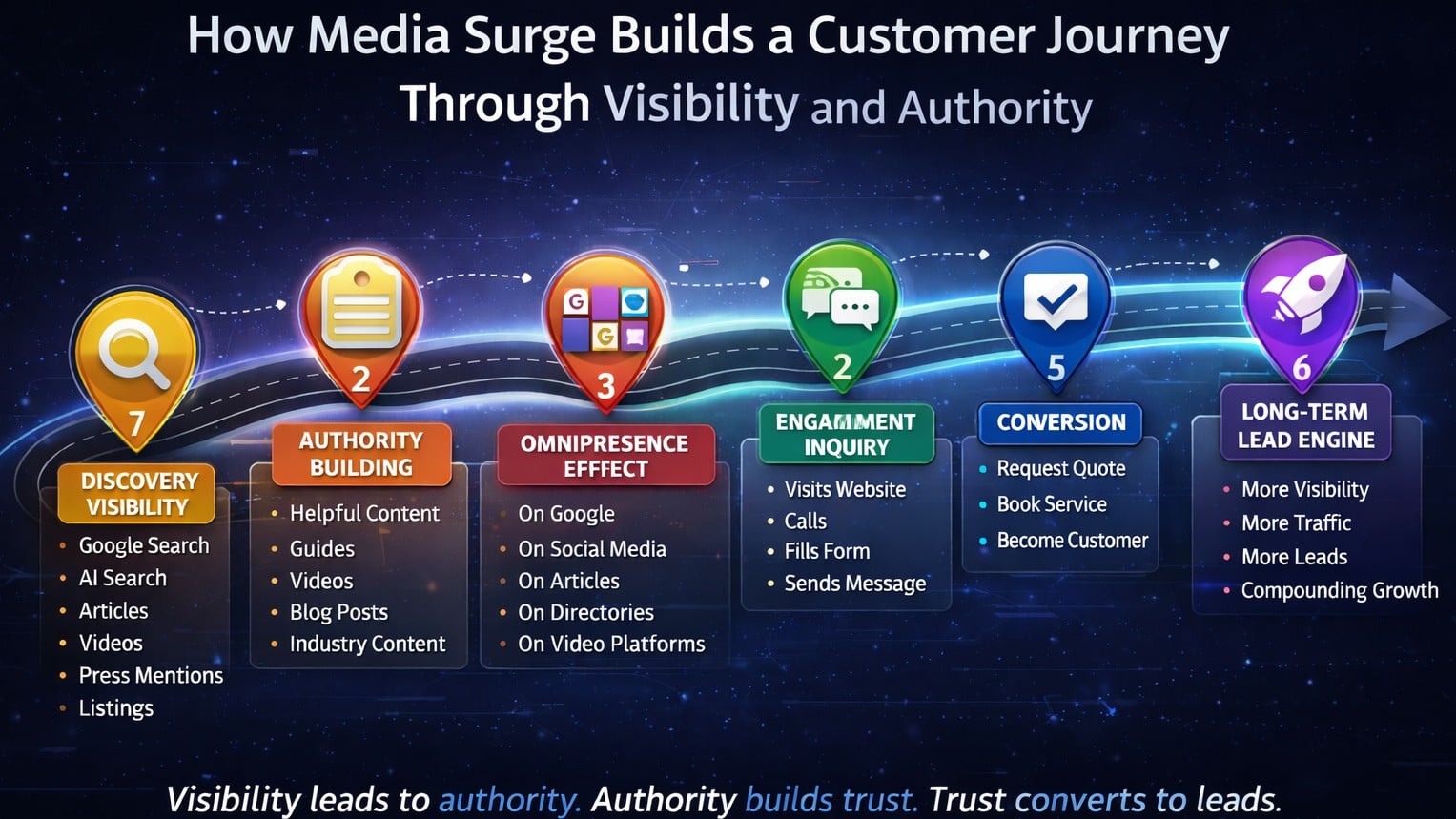
Multi-format content strategy fundamentally changes how agencies track and influence customer behavior. Instead of relying on isolated pieces of content scattered across different platforms, this approach creates a unified ecosystem where each format serves a specific purpose in the customer journey.
The transformation begins with understanding that different content formats appeal to different cognitive preferences. Video content captures attention during the consideration phase, while infographics provide quick decision support. Podcasts build deep trust through extended engagement, and news articles establish authority during the initial awareness stage.
Agencies implementing multi-format strategies gain visibility into previously hidden customer behaviors. A prospect might discover a brand through a YouTube video, research further through blog posts, and make a final decision after listening to a podcast episode. This interconnected content web provides clearer journey mapping than any single content type could achieve on its own.
Why Traditional Marketing Agencies Miss Most Customer Touchpoints
Single-format content strategies create significant blind spots in customer journey mapping. Agencies relying solely on blog posts miss visual learners, while those focusing only on video content lose prospects who prefer text-based research. These gaps become costly when potential customers abandon their journey due to a lack of engagement in their preferred format.
Modern Customers Research Everywhere Before Choosing a Business
Modern consumer behavior has fundamentally shifted toward extensive pre-purchase research. Shoppers no longer rely on a single source of information. They cross-reference across multiple platforms, consume a variety of content types, and validate their decisions through diverse media formats before making purchases.
This research behavior spans across industries and demographics. B2B buyers might start with industry reports, move on to video demonstrations, listen to podcast interviews with thought leaders, and then review case studies before contacting sales teams. Each touchpoint requires different content formats to maintain engagement and build trust.
Customers Use Multiple Platforms Before Contacting a Business
Different platforms foster unique consumption behaviors that single-format strategies cannot address. LinkedIn users prefer professional articles and industry insights, while TikTok audiences engage with short, entertaining videos. Instagram favors visual storytelling through images and reels, whereas Spotify listeners seek in-depth audio content.
These platform-specific preferences create natural barriers when agencies produce content in only one format. A video strategy might succeed on YouTube but fail to capture LinkedIn’s professional audience. Similarly, text-heavy content performs well on Medium but struggles to gain traction on visually-oriented platforms like Pinterest.
How Media Surge Covers the Entire Customer Journey With Multi-Format Content
Complete customer journey coverage requires strategic deployment of diverse content formats, each serving specific functions in the buying process. The most effective agencies use eight core formats that collectively address every stage from initial awareness through post-purchase advocacy.
1. News Articles for Awareness Stage Authority
News articles establish immediate credibility and capture organic search traffic during the critical awareness stage. When potential customers research industry topics or trending issues, authoritative news content positions agencies and their clients as thought leaders rather than sales-focused entities.
Effective news articles address industry developments, market trends, and educational topics that potential customers actively search for. This format works particularly well for SEO purposes, as search engines favor timely, newsworthy content that provides genuine value to readers. The key is creating articles that inform rather than sell, building trust that converts later in the customer journey.
2. Video Content for Consideration Phase Engagement
Video content dominates the consideration phase because it combines visual demonstration with emotional connection. Prospects can see products in action, understand complex concepts through visual explanation, and develop personal connections with brand representatives or customers sharing testimonials.
Long-form videos work best for detailed product demonstrations and educational content, while short-form videos capture attention on social platforms. The versatility of video content allows agencies to repurpose single shoots into multiple formats, including full-length YouTube videos, Instagram Reels, TikTok content, and embedded website demonstrations.
3. Podcasts for In-Depth Education and Trust Building
Podcasts create intimate relationships between brands and prospects through extended, uninterrupted engagement. Unlike other content formats that compete for visual attention, podcasts accompany listeners during commutes, workouts, and daily activities, providing consistent brand exposure over extended periods.
The interview-style podcast format particularly excels at building authority. When agency clients appear as knowledgeable guests or host industry experts, they position themselves as trusted advisors rather than vendors. This format also allows for deep dives into complex topics that shorter content formats cannot adequately address.
4. Infographics and Visual Content for Quick Decision Support
Infographics serve prospects who need to process information quickly during decision-making phases. These visual formats excel at presenting comparisons, statistics, and step-by-step processes that help customers evaluate options efficiently.
Visual content performs exceptionally well across Pinterest, LinkedIn, and social media platforms where users scroll quickly through feeds. Well-designed infographics often get shared extensively, amplifying reach beyond initial audiences and creating viral potential that other content formats rarely achieve.
The Media Surge Visibility Framework: Research, Create, Distribute
A successful multi-format content transformation follows a three-step approach that delivers maximum impact across all customer journey stages. This framework eliminates the common mistake of creating content without a strategic purpose or distribution planning.
Step 1: Research & Target Customer Questions
Effective content transformation begins with thorough research into customer questions and search behaviors. Rather than assuming what prospects want to know, successful agencies dig deep into actual search queries, social media discussions, and customer service inquiries to identify genuine information gaps.
This research phase involves analyzing competitor content gaps, identifying trending industry topics, and understanding platform-specific search behaviors. The goal is to discover high-demand, low-competition topics that can be transformed into multiple content formats while maintaining relevance across different platforms and audience preferences.
Step 2: Create & Repurpose Across Formats
The creation phase transforms single topics into content ecosystems. Starting with core research or source material, agencies develop news articles, blog posts, videos, podcasts, infographics, slideshows, and social media posts that address the same topic from different angles and depths.
Effective repurposing maintains topic consistency while adapting presentation styles for platform requirements. An industry analysis might become a detailed blog post, an infographic highlighting key statistics, a video explaining implications, and a podcast episode featuring expert interviews. Each format serves different learning preferences while reinforcing the same core messages.
Step 3: Distribute on Strategically Selected Platforms
Distribution strategy determines the impact of content more than the quality of creation. Strategic distribution involves identifying where target audiences consume specific content types, then systematically publishing across those platforms while maintaining consistent brand messaging.
Modern distribution spans traditional platforms like websites and social media, as well as emerging channels such as podcast networks, video platforms, news sites, and AI-powered search engines. Media Surge Marketing helps agencies navigate this complex distribution landscape with systematic, multi-platform strategies that maximize content reach and engagement.
Why Multi-Channel Visibility Generates More Leads Over Time
Data-driven agencies measure the performance of multi-format content to refine their customer journey mapping. The metrics reveal significant advantages for multi-format content approaches over single-format campaigns across all major performance indicators.
Multi-Channel Distribution Leads to 494% Higher Order Rate.
Multi-channel content distribution creates compound effects that dramatically improve conversion rates. When prospects encounter brands across multiple platforms and formats, they develop stronger trust relationships and deeper product understanding, leading to higher purchase intent and order completion rates.
This performance improvement stems from reinforcement effects. Prospects who see consistent messaging across video content, read supporting articles, and hear podcast discussions develop an understanding that single-format exposure cannot provide. Multi-touchpoint exposure builds confidence that leads to purchasing decisions.
Content Marketing Generates 3x More Leads at 62% Less Cost.
Content marketing consistently outperforms traditional advertising in both lead generation and cost efficiency. Multi-format content strategies amplify these advantages by capturing leads across diverse platforms and audience preferences, creating multiple conversion opportunities from single content investments.
The cost-efficiency gains compound over time as content continues to generate leads long after initial publication. Unlike paid ads, which stop delivering results when spending stops, well-distributed content builds long-term value through SEO, social sharing, and platform algorithm promotion.
How Media Surge Builds Long-Term Lead Generation for Businesses
Modern content transformation requires sophisticated systems that can efficiently convert single topics into multiple formats while maintaining quality and brand consistency. Manual content creation across eight different formats becomes prohibitively time-consuming and resource-intensive for most agencies.
Automated multi-format systems solve this scalability challenge by streamlining the transformation process from initial research through final distribution. These platforms can generate news articles, blog posts, videos, podcasts, infographics, and social media content from a single source of materials, then automatically distribute it across hundreds of platforms.
The efficiency gains are substantial: agencies can create multi-format campaigns in minutes rather than weeks, allowing for consistent content output that maintains customer engagement across all journey stages. This systematic approach ensures no potential touchpoints are missed while dramatically reducing the resources required for content marketing.
Advanced automation also enables better performance tracking across formats and platforms, providing clear insights into which content types drive the most engagement at different stages of the customer journey. This data allows agencies to continuously refine their multi-format strategies, improving ROI over time while reducing manual oversight.
Agencies looking to implement multi-format content strategies can explore Media Surge Marketing’s automated content transformation solutions at https://surge.clientcabin.com.
Media Surge Marketing
4183 Franklin Rd
Murfreesboro
TN
37128
United States